ServicesLand Clearing
Land Clearing in Greer
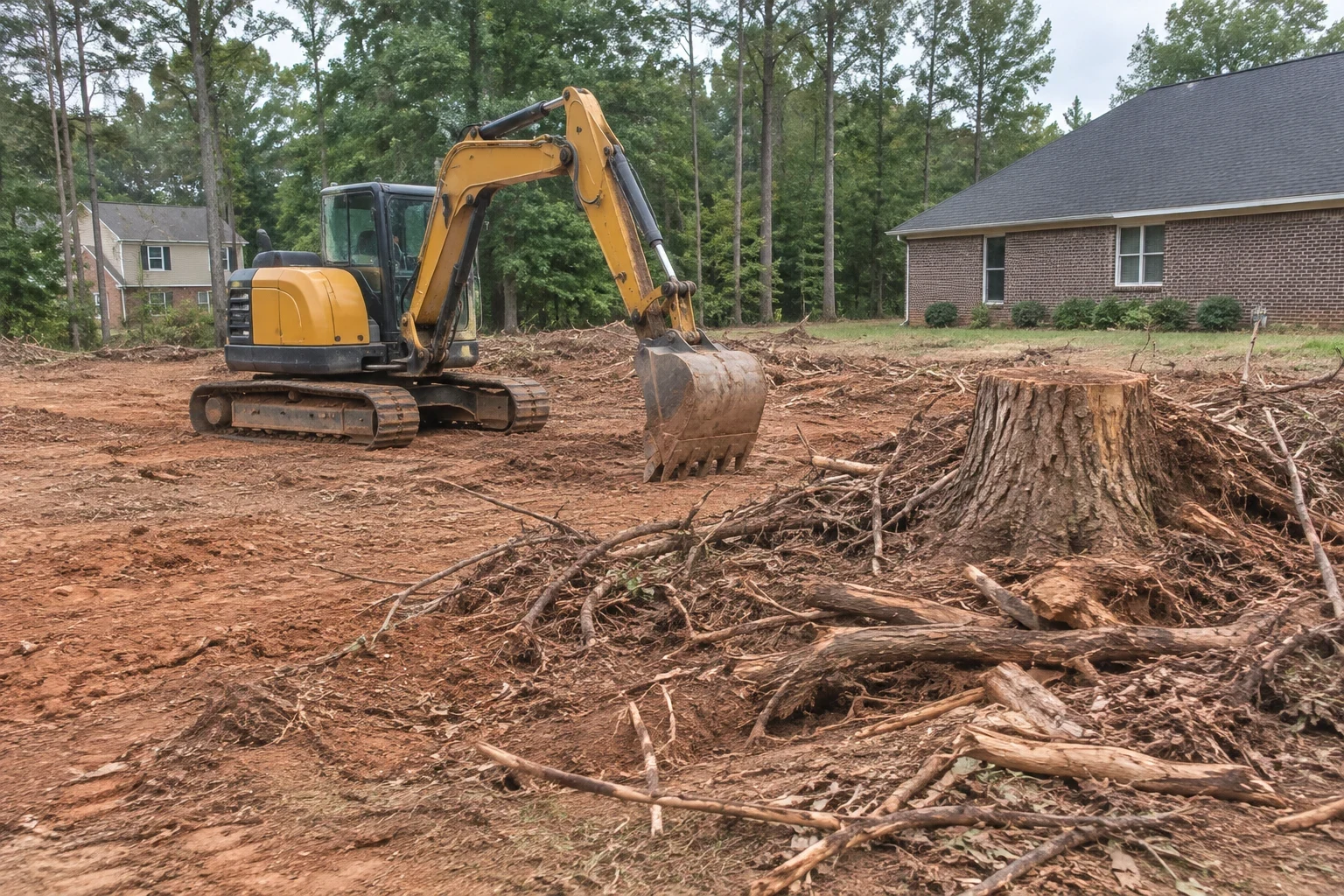
We clear lots for new homes, additions and outbuildings. Trees, stumps, roots and brush come out where the build needs them gone, and the trees worth keeping stay put. You get a site that is ready for grading, with no guesswork about what happens next.
Clearing Is the First Step of the Build
Land clearing sounds simple. Knock down the trees, haul them off. But what you clear, and how, shapes everything after it. Clear too much and you lose shade and pay to replant. Clear too little and the excavator can't reach the house pad, or a big oak ends up with its roots cut under the new driveway.
So we start with the plan. We mark the house footprint, the driveway, the septic or sewer route, the drainage path and a working buffer around each. Then we decide tree by tree. That's the planning-ahead part, and it saves money later.
Most of our clearing jobs lead straight into grading and foundation work, so the same crew that clears the lot knows what the next phase needs. If you're just getting a lot ready to sell or to build on in a few years, we can do that too.
What the Work Includes
- Layout and tree marking
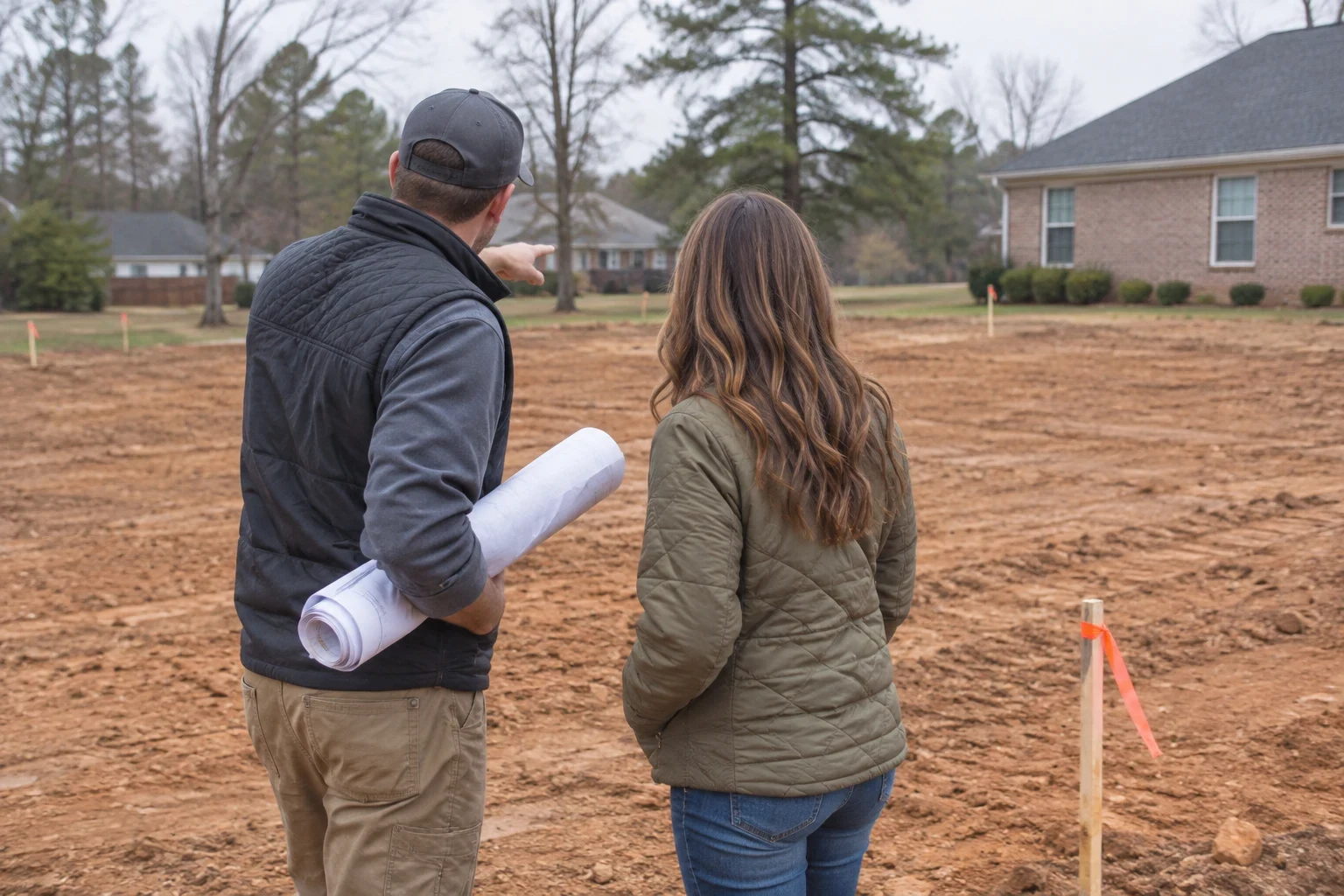
- We walk the lot with you and flag the clearing limits. Trees you want to keep get marked and protected with fencing out past the drip line where we can.
- Tree and brush removal
- We cut and remove trees, saplings, vines and underbrush inside the marked area. Pines, sweetgums and hardwoods all come down in a controlled way, away from anything you want saved.
- Stump and root removal
- Under a house pad or driveway, stumps have to come out, roots and all. Buried roots rot and leave soft spots that settle. Outside the build area, grinding the stump flush is often enough.
- Debris handling
- We haul off logs and brush or grind them into mulch you can keep on site. Open burning is limited in many areas, so we plan for hauling or grinding from the start.
- Erosion control
- Bare dirt washes fast in a hard rain. We set silt fence where the slope and runoff call for it, and we handle the land disturbance permit when the size of the job requires one.
Signs Your Lot Needs Clearing
You have plans but no access
If a truck can't get from the road to where the house will sit, the build can't start. Clearing the driveway path is often the first job.
The lot has grown in
Land that sat for a few years fills with saplings, briars and vines. It hides low spots, old fences and debris that you want found before you buy materials.
Trees lean toward the building site
Dead or leaning trees near the future house are a risk to the structure and the crew. Better to take them down before framing starts.
You're planning an addition or garage
Even a small addition needs room for the foundation, the equipment and the drainage. Clearing a tight backyard takes more care than an open lot.
What Affects the Price
Every lot is different, so we price after we've walked it. The biggest swings come from how much is growing on the land and what we have to do with it once it's down. Here's what we look at.
Acreage and density
A half acre of scattered pines costs far less than the same area grown thick with hardwoods and vines.
Tree size
Large trees take more time, bigger equipment and more hauling. Big stumps under the house pad add the most.
Debris plan
Hauling everything off costs more than grinding brush into mulch that stays on the lot. We'll tell you the tradeoff.
Access and slope
A narrow entry, a steep grade or soft red clay after a wet spell can slow the equipment and change the approach.
Permits and erosion control
Larger disturbed areas need a permit and more silt fence, which adds cost and some lead time.
How a Clearing Job Runs
- 1
Site walk and consultation
We meet you on the lot, look at the trees, the slope and the access, and talk about what you plan to build. You'll know what we'd clear, what we'd save and why.
- 2
Written scope and estimate
You get a written estimate that lists the area, the stump work, the debris plan and any permit steps. Nothing gets added without a conversation first.
- 3
Marking and protection
Before any saw starts, the clearing limits are flagged and keeper trees are fenced. We call in utility locates so buried lines are marked.
- 4
Clearing and cleanup
Trees come down, stumps come out and debris is hauled or ground. Most residential lots take a few days, depending on size and how thick it is. We leave the site ready for grading, not just knocked down.
Land Clearing Questions
Can I keep some of the trees?
Yes, and we encourage it where it makes sense. We look at how close each tree sits to the house, driveway and utility lines. A tree that loses roots on one side may not make it, so we'll tell you straight which ones are worth saving.
Will clearing my land require a permit?
That comes down to the size of the area we disturb and the rules where your property sits. A modest residential clearing usually needs no special paperwork. Bigger jobs call for a land disturbance permit plus silt fence and other erosion control. We find out before any equipment shows up, and if a permit is needed, we take care of it.
Should I clear now or wait until I'm ready to build?
Clearing months ahead can leave bare soil to wash out and weeds to grow back. The best timing is shortly before grading and foundation work. If you need something done sooner, we can open up the access and leave the rest until your plans are set.
What happens to the wood?
We can haul it off, grind brush and limbs into mulch, or cut logs to firewood length and stack them for you. Tell us what you want and we'll price it that way.
Do you do the grading too?
Yes. Grading is usually the next step, and handling both with one crew keeps the schedule tight. We can also carry the job on through foundation work and custom home building.

Get Your Lot Ready for the Build
Tell us about your land and what you want to build on it. We'll walk the lot, talk through what should come out and what should stay, and give you a clear plan before anything is cut.