ServicesGrading
Grading in Greer, SC
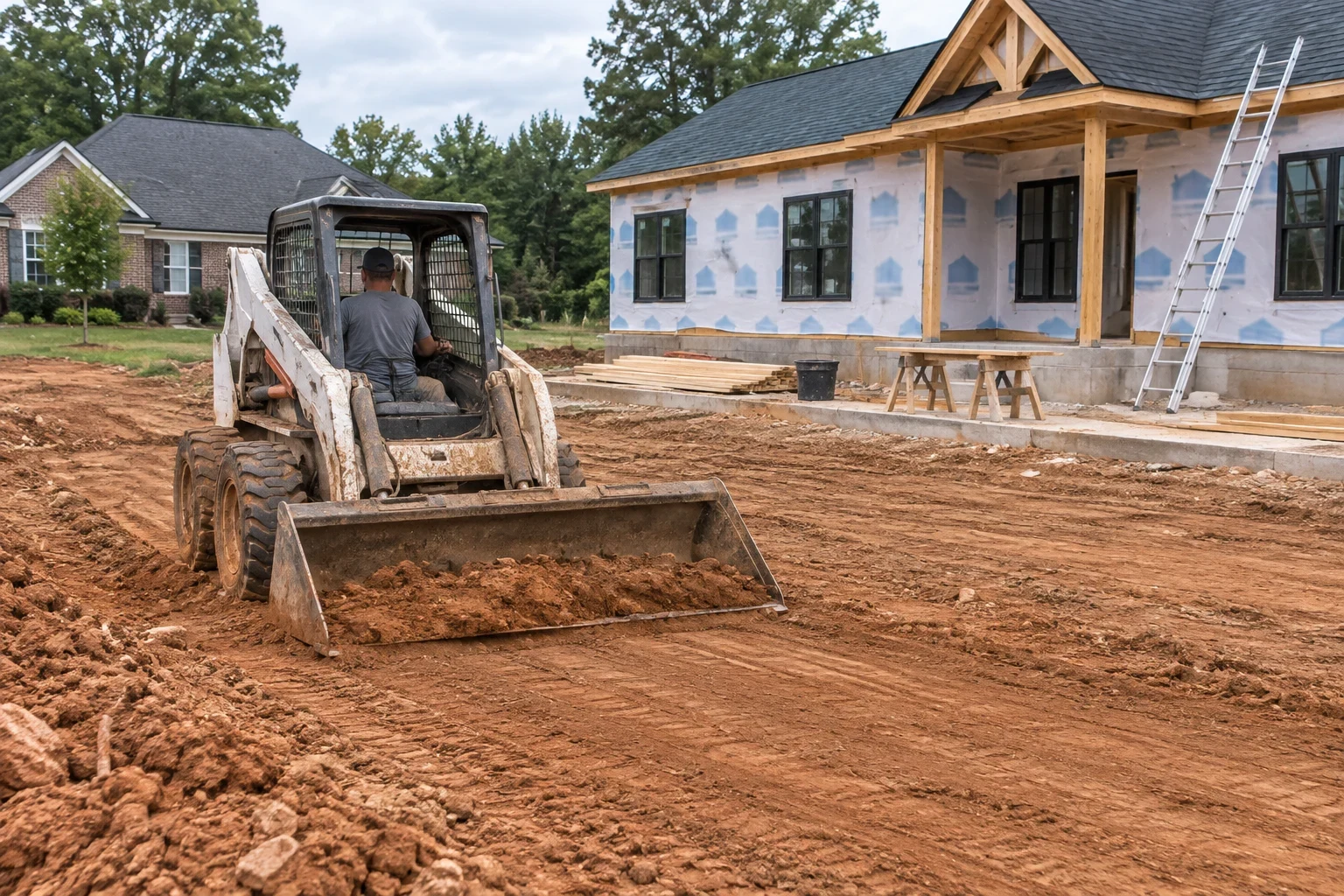
We shape the ground around your home or future home so it drains right and holds a foundation. That means compacted building pads, slopes that carry rain away and a final grade ready for grass. Get it done before water finds the low spots for you.
What grading does and when you need it
Grading is shaping the ground so it does what you need. On a new lot, that means a level, compacted pad for the foundation and a slope that moves water away from it. On an existing home, it usually means fixing ground that tilts the wrong way and sends rain toward the crawl space or slab.
We grade as part of our custom home builds and as a job on its own. Our red clay holds water and shifts when it gets soaked, so good grading is about compaction and slope, not just pushing dirt around.
The best time to grade is before the trouble starts. If you are planning a build, an addition or new siding, getting the grade right first keeps you from tearing up finished work later.
What our grading work covers
- Building pad prep
- We strip the topsoil, spread new dirt in thin lifts and compact each layer before the next one goes down. A pad built this way does not settle under the foundation a year after you move in.
- Slope away from the house
- Building codes generally call for the ground to fall about six inches over the first ten feet out from the foundation. We set that slope and check it with a laser level, not by eye.
- Swales and water paths
- A swale is a shallow, gentle channel that carries runoff around the house to the street or another safe outlet. It keeps a heavy storm from cutting its own path through your yard.
- Driveway and walkway base
- We grade and compact the subgrade under drives and walks so they drain to the side and do not crack or sink at the low spots.
- Final grade and topsoil
- Once the rough work is done, we spread topsoil back and rake it smooth. You get ground that is ready for seed, sod or beds.
- Erosion control on site
- Silt fence goes up before the dirt moves, so soil stays on your lot and out of the neighbor's yard and the storm drain.
Signs your ground needs grading
Water sits by the foundation
If puddles hang around the walls a day after rain, the ground is sloping toward the house. That water ends up in the crawl space or against the slab.
Damp or musty crawl space
A wet crawl space often starts outside. Fixing the slope is usually cheaper than fighting moisture underneath for years.
Gullies and washed-out mulch
Ruts in the yard and mulch carried down the hill mean water is moving fast with nowhere planned to go.
Dirt splashed on the siding
When soil sits right up against the siding or leaves a dirt line along the bottom, the grade is too high. That invites rot and bugs.
A newly cleared lot
If your land clearing is done and you are ready to build, grading is the next step. The pad and drainage need to be set before any foundation work starts.
How a grading job runs
- 1
Walk the site
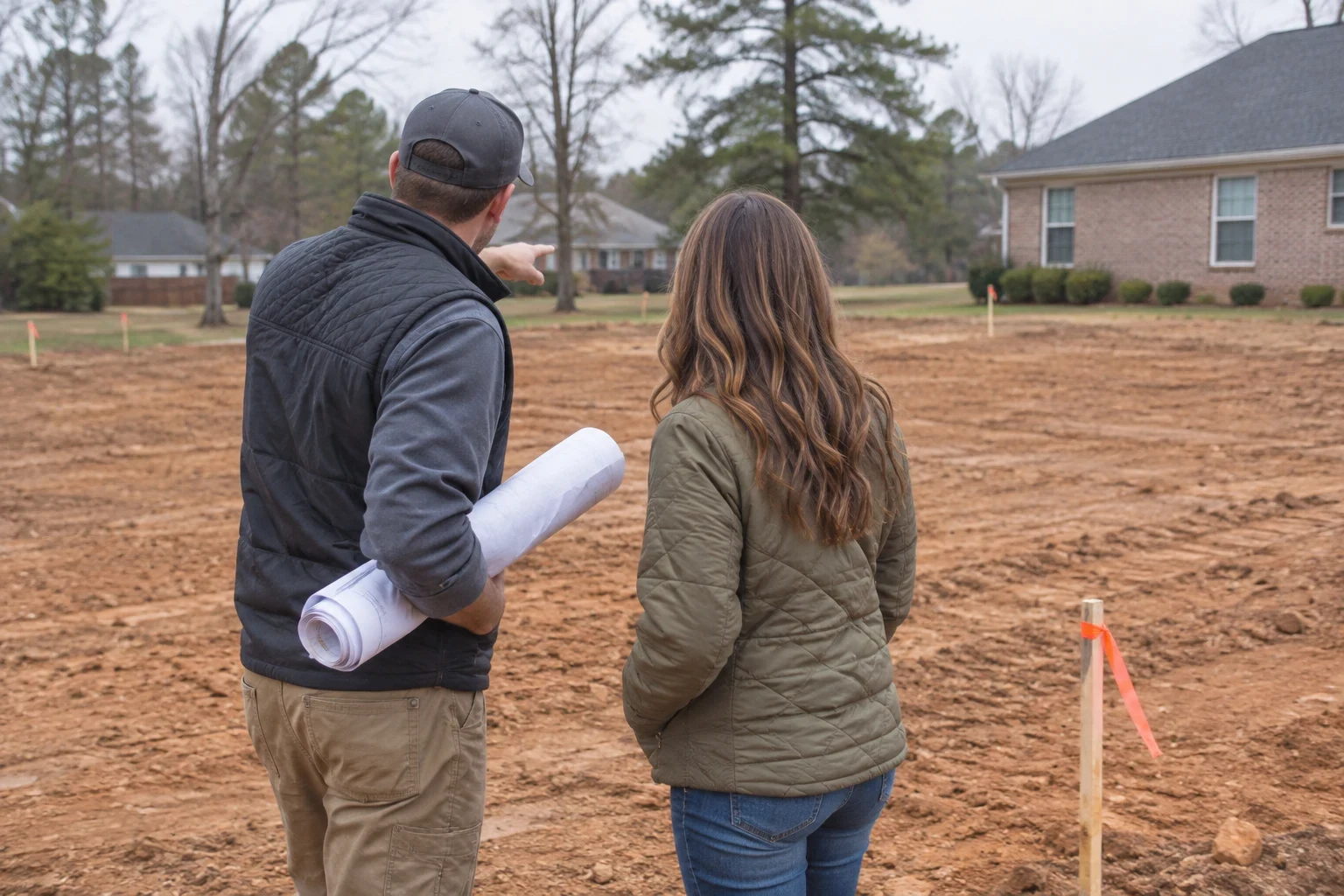
We look at where water comes from and where it goes, then shoot grades with a laser level. You hear plainly what we see, including if the problem is something grading will not fix.
- 2
Written plan and estimate
You get a line-item estimate showing what gets cut, what gets filled and whether dirt has to be hauled in or out. No guessing on your end.
- 3
Mark and protect
We call in utility locates through SC 811 before digging. Silt fence goes up, and we flag trees, beds and anything else you want left alone.
- 4
Cut, fill and compact
We move soil in layers and compact as we go, checking the slope as the work progresses. If heavy rain soaks the clay, we wait instead of packing mud.
- 5
Final grade and walk-through
Topsoil goes back, the site gets cleaned up and we walk it with you. We show you where the water will run so you know what to expect in the next storm.
What moves the cost of grading
Every grading price comes down to how much dirt moves and how hard it is to move. We look at the site before giving a number, and the estimate spells out each part so you can plan your budget ahead of time.
- Area and how much soil moves
- A strip along one side of the house is a small job. A full building pad or a whole-yard regrade takes more machine time and more material.
- Fill brought in or hauled off
- Some sites balance out, with dirt cut from one spot used to fill another. Others need trucks of fill delivered or extra soil hauled away, and that adds up.
- Soil, rock and weather
- Clay that is wet takes longer to work and compact. Rock we hit below the surface can mean extra equipment.
- Access to the work
- A tight backyard behind a fence calls for smaller machines and more trips, which takes longer than an open lot.
Grading questions we hear
Something not covered here? (864) 362-2447
Do I need grading before you build my house?
Yes. The pad has to be level and compacted, and the lot has to drain away from where the house will sit. We handle this as part of our custom home building, so the grade and the foundation are planned together.
How long does grading take?
A yard regrade around an existing home often takes a few days of equipment work. A new home pad depends on its size, how much fill is needed and the weather. We give you a realistic timeline with the estimate.
Can you grade when it has been raining?
Not well. Wet clay will not compact properly and turns to soup under the machines. We wait for the ground to dry enough, because a pad packed wet can settle later.
Will grading tear up my lawn?
Any area we regrade loses its grass. We leave clean topsoil raked smooth so new seed or sod takes hold. We also keep machines off parts of the yard that do not need work.
Do I need a permit for grading?
It depends on how much ground gets disturbed and where the property sits, since Greer crosses two counties with their own rules. Small yard regrades often need nothing. Larger sites may need a land disturbance permit and an erosion plan, and we check what applies before we start.
Will regrading stop water in my crawl space?
Often, if the water is coming from surface runoff. If it is groundwater rising from below, grading alone will not solve it, and we will tell you that up front rather than sell you work that will not help.
Get the ground right before you build on it
Grading is cheaper to do once, early, than to fix after the house, patio or siding is finished. Give us a call and we can walk through your lot or yard and plan the work ahead of time.