ServicesFlooring Installation
Flooring Installation in Greer
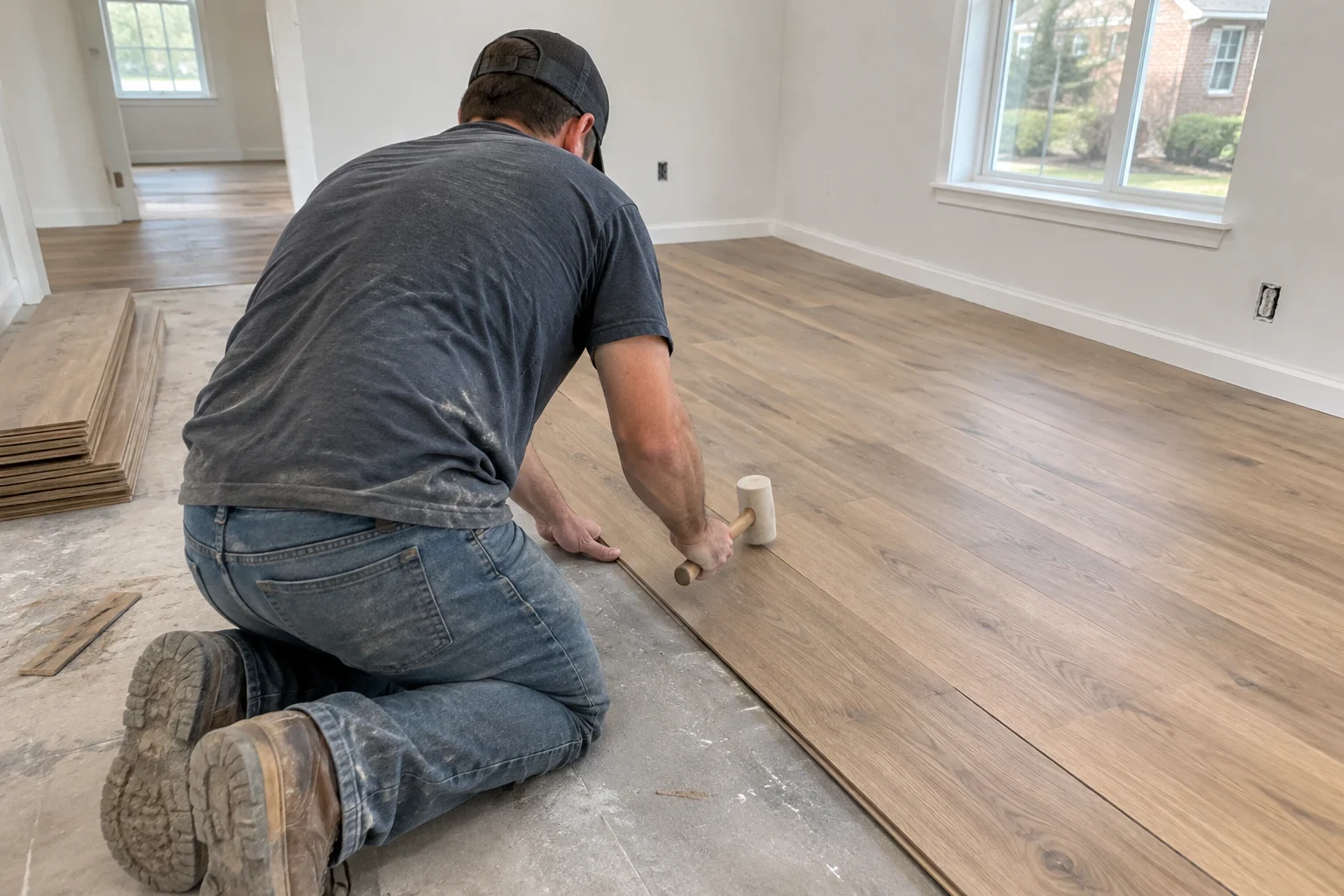
We install hardwood, luxury vinyl plank and tile in new builds and existing homes. Before any board goes down, we check the subfloor, fix what's loose or out of level, and give you a written plan for the whole job.
A new floor is only as good as what's under it
Most flooring problems we see didn't start with the flooring. They started with a subfloor that bounced, a slab that held moisture, or boards that never got time to adjust to the house. So we spend real time on prep, and we tell you up front what we found.
We put in floors as part of a custom home build, during a larger remodel, or as a job on its own. If you're planning a kitchen or addition, it pays to pick the floor early. Floor height affects door trim, cabinet toe kicks and stair risers, and it's cheaper to plan for that than to fix it later.
What our flooring work includes
Subfloor inspection
We walk the room, look for soft spots and squeaks, and check how flat the floor is with a long straightedge. You see what we see before we price anything.
Moisture readings
We test wood subfloors and concrete slabs before installing. Greer's humid summers and crawlspace homes make this step matter, because damp framing is what makes hardwood cup.
Removal and haul-off
We pull up old carpet, vinyl, tile or wood, scrape the leftover adhesive, and take the debris away.
Leveling and repairs
Loose subfloor gets screwed down. Low spots get filled and high spots get ground. Damaged sheathing gets replaced.
Installation
Nail-down or glue-down hardwood, floating or glued vinyl plank, and tile set on the right backer or membrane for the room.
Trim and transitions
Baseboard or shoe molding, thresholds between rooms, and stair nosings, fitted so edges don't catch a toe.
Signs it's time to plan new floors
Boards cupping or gapping
Edges that rise in summer and gaps that open in winter usually point to moisture moving through the subfloor. Replacing the boards alone won't fix it.
A floor that bounces or squeaks
Soft spots and noise mean loose or worn subfloor. Catching it now keeps it from cracking tile or breaking vinyl locks later.
Cracked tile or grout
A few cracked tiles in a line often follow movement underneath. We find the cause before we set new tile.
Worn finish you can't refinish again
Thin engineered wood or old hardwood that's been sanded too many times may not have enough wear layer left.
A remodel on the calendar
If walls or cabinets are coming out, that's the best time to choose and order flooring so it goes in once, in the right order.
How a flooring job runs
- 1
Consultation and measure
We talk through the rooms, how you use them, and the material you're leaning toward. Then we measure and note any stairs, closets and odd angles.
- 2
Subfloor check and written plan
We take moisture readings and check for flatness. You get a written estimate that lists prep, material and install as separate lines.
- 3
Delivery and acclimation
Wood and some vinyl products sit in the house for a few days to settle to its temperature and humidity. We keep the HVAC running during that time.
- 4
Prep and install
We clear the room, protect nearby floors and doorways, fix the subfloor, and lay the new floor. Most rooms are walkable the same day, though tile needs grout to cure.
- 5
Trim, walk-through and cleanup
We set trim and transitions, vacuum, and walk the floor with you so you can point out anything that doesn't look right.
What moves the price of a floor
Two rooms of the same size can cost very different amounts. The biggest swings come from the material you pick and what we find under the old floor. We price prep and install as separate lines so you can see where the money goes.
- Material
- Solid hardwood, engineered wood, vinyl plank and tile all differ in cost and in how long they take to put down. Large-format tile takes the most labor.
- Subfloor condition
- A flat, dry subfloor is quick. Leveling a slab or replacing rotted sheathing adds time and material.
- Tear-out
- Pulling glued-down vinyl or tile set in mortar takes longer than pulling carpet.
- Layout and stairs
- Open rooms go fast. Lots of doorways, closets, angles and stair treads mean more cuts and more trim work.
Flooring questions we hear
Something not covered here? (864) 362-2447
Can you put new flooring over the old floor?
Sometimes. Floating vinyl can go over flat sheet vinyl or tile that is still stuck down tight with no loose spots. Carpet always comes up, and we don't stack hardwood over hardwood. We'll tell you which way works after we check the floor.
Why does hardwood have to sit in the house before you install it?
Wood swells and shrinks with humidity. If it goes down before it matches the house, it moves after install and you get gaps or cupping. We check moisture in both the wood and the subfloor before we start.
Do we need to move out while you work?
Usually not. We work room by room when we can, so you keep a path through the house. Tile and glue-down floors need time before heavy traffic, and we'll tell you how long.
Should flooring go in before or after cabinets?
It depends on the floor. Floating floors usually go in after cabinets so they can move. Tile and nail-down hardwood can go under them. We sort out the order when we plan the remodel.
Do you install flooring in new custom homes too?
Yes. On a custom home build we plan flooring with the floor plan, so subfloor, heights and transitions are set before framing is done.
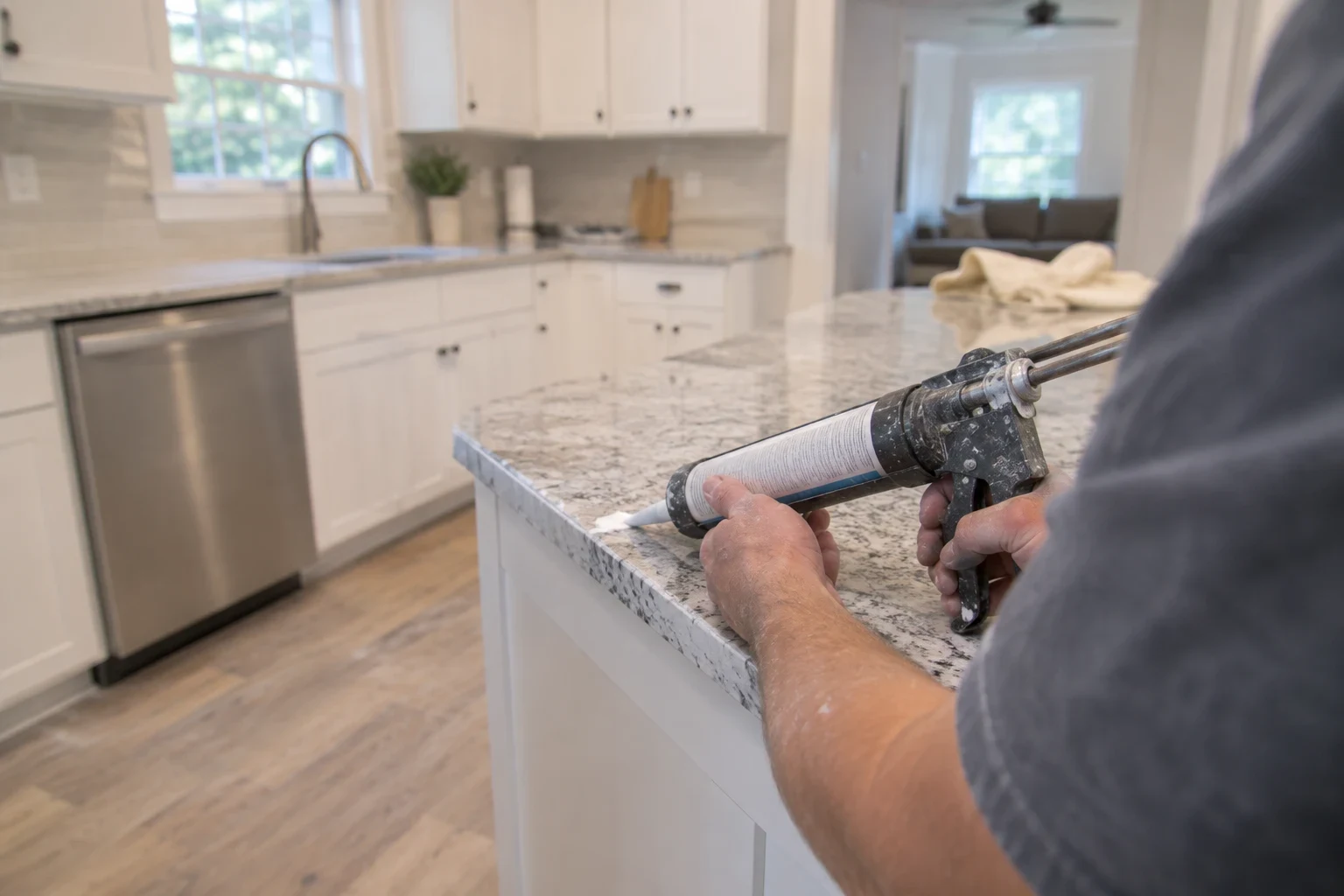
Pick your floor before the project starts
Choosing material early gives time for ordering, acclimation and subfloor work without rushing. We serve Greer, Taylors, Greenville and nearby towns.